OpenClaw Is Not for Everyone… Yet
The hype is real, but so are the rough edges: OpenClaw can execute meaningful work, but still requires clear guardrails, careful rollout, and hands-on ownership to use well.
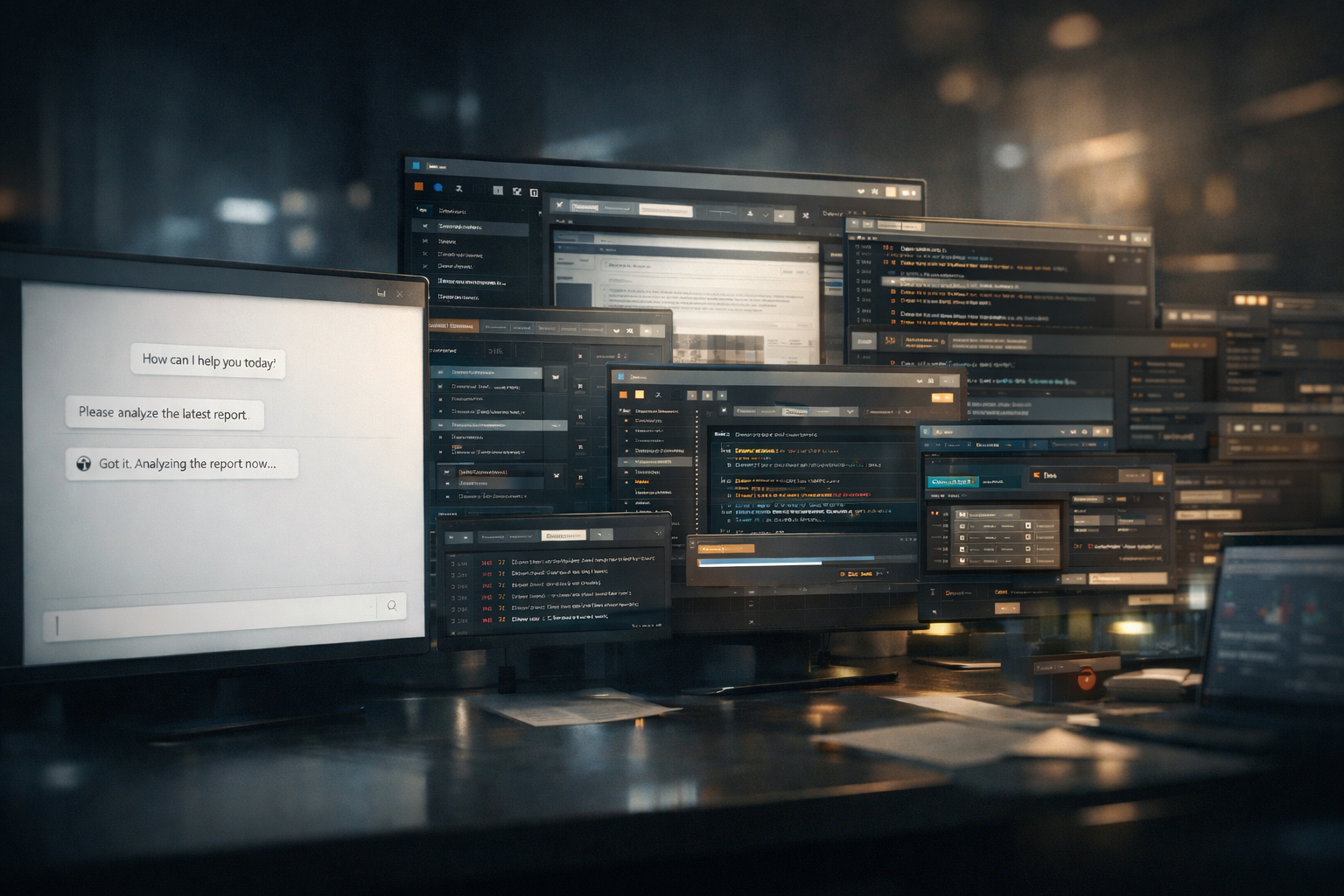
When ChatGPT was released to the public in November 2022, it introduced millions of people to AI through a chat box. Since then, more and more people have come to use that interface to summarize and rewrite text, answer questions, think through decisions, or sometimes just talk.
OpenClaw comes from a different lane. Instead of keeping AI inside a chat window, it connects models to tools and gives them a way to act inside a working environment, whether that means reading files, using a browser, or running checks before reporting back.
That is a big part of why it took off so quickly. Seeing an AI go from giving advice to actually handling parts of a task is immediately impressive. It changes the experience in a way that is easy to understand the moment you see it.
That is where the hype runs into reality. OpenClaw is interesting for a reason, and in the right hands it can be genuinely useful. But it is still early, still uneven, and still not something every person or team can pick up and use well right away.
How We Got Here
To understand why OpenClaw landed the way it did, it helps to step back for a minute. The full history is bigger than this, but the general shape from 2017 to now looks something like this:
- 2017 - Google researchers publish “Attention Is All You Need,” introducing the Transformer architecture, which becomes the foundation for modern large language models.
- 2018 - Google releases BERT (Bidirectional Encoder Representations from Transformers), a major step forward in language understanding with clear implications for things like search, question answering, and text classification.
- 2019 - GPT-2 makes coherent text generation feel much more real and helps draw wider attention to the generative side of transformer-based models.
- 2020 - GPT-3 helps establish the large language model as a more general-purpose interface, showing that one large model can handle a wide range of tasks through prompting and drawing serious attention in technical and product circles.
- 2021 - GitHub Copilot arrives as a specialized AI coding assistant, first as a plugin in environments like VS Code, showing how LLMs can be embedded directly into software workflows developers already use.
- 2022 - OpenAI releases ChatGPT to the public, turning LLMs from an important technical shift into a mainstream consumer experience and accelerating demand for AI across software products.
- 2023 - Tools like Cursor mark a shift from embedded AI assistance toward AI systems that can work inside an environment, read context, edit across files, use tools, and take on multi-step tasks with user permission.
That is not the whole story, but it is enough to see where things were heading. By 2023, competition was accelerating as companies like Anthropic, Google, and Meta pushed their own models forward. By 2024, lower-cost, bundled, and locally runnable options made experimentation much more accessible, which helped open the door for more ambitious agent-style tools.
By late 2025, a lot of users, especially developers, were already getting used to AI helping with tasks in browser sessions, development environments, and API-based workflows. OpenClaw did not come out of nowhere. It showed up at a moment when people were already ready to understand what it was doing.
When Peter Steinberger released Clawdbot, later renamed OpenClaw, it pushed that shift further. The idea was no longer just AI inside a single application, but an agent acting across its own environment. It was not limited to coding tasks, even if coding remained one of the clearest use cases. That broader frame made it easier to see how something like this could move into everyday workflows, which helps explain why it caught on so quickly.
What is OpenClaw?
We can start with what it is not. OpenClaw is not an AI model, nor is it a model provider. It is an AI harness, meaning a system built on top of language models that is not tied to any single provider or model. If you need a quick refresher on some of the terms, check out Neo's guide.
As a harness, it lets the model connect to tools, memory, files, and communication channels. Tools are what turn OpenClaw from a chatbot into something that can take action. They let the model interact with files, browsers, messages, commands, and other connected systems, rather than only reply in text. Memory is what lets OpenClaw carry context forward. It helps the system remember preferences, prior conversations, and ongoing work, rather than treating every interaction as a fresh start. Files give OpenClaw a working surface beyond the chat itself. They let it read documents, save notes, update drafts, and keep material organized in a way that supports ongoing work rather than one-off replies. Finally, communication channels are what let OpenClaw meet the user where they already are. Instead of being trapped in a single interface, it can interact via services like Discord, Telegram, or other messaging platforms, making it feel more present and persistent in everyday use.
Taken together, those functions make OpenClaw feel less like a one-off tool and more like a persistent assistant. Because it can remember context, work across files and tools, and meet the user through familiar channels, it moves beyond the idea of an app built to perform one task and closer to something that can help get real work done over time.
A Note of Caution
OpenClaw is impressive, but the concerns are not hard to find. The same things that make it useful are the same things that raise the stakes. Once a system can touch tools, files, memory, and communication channels, the consequences of being wrong change. A chatbot giving a bad answer is annoying, but a system taking action in the wrong place, or with too much access, is another level.
Some of that is a security problem. Prompt injection gets discussed the most, but it is not the only issue. If skills and reusable automations become part of the ecosystem, then bad review practices, careless permissions, or outright malicious add-ons become part of the picture too. The risk is no longer just weak output. It is weak output tied to action. Other concerns are less dramatic, but still real. Costs can stack up faster than people expect, especially when a system can run in the background, take multiple turns to complete a task, and carry larger amounts of context forward as it goes. The platform also updates quickly, often every few days, which means fixes can arrive fast, but so can new quirks, changed behavior, or broken functionality. A task can stall halfway through, a tool can fail at the wrong moment, or behavior can shift after an update in ways users were not expecting. OpenClaw is very flexible, and the more flexible a system is, the more discipline it usually takes to use well.
So Now What?
OpenClaw has real limitations today, but it also has real potential. The security concerns are real, the rough edges are real, and the pace of change is real, too. Even so, it does not feel like a gimmick or a fluke. It feels more like an early version of something larger that is still taking shape in public.
People were already getting used to chat interfaces, coding copilots, tool use, persistent context, and AI systems that could do more than answer one prompt at a time. OpenClaw pulled those threads together in a form people could quickly understand and start using.
So I do not think OpenClaw is something to dismiss, and I do not think it is just a tool for developers. I think it matters because it is a real refinement of tools and patterns people were already moving toward. But that still does not mean it is ready for everyone, or that everyone needs to adopt it right now.

Ryan
Architect of digital systems and thoughtful experiments