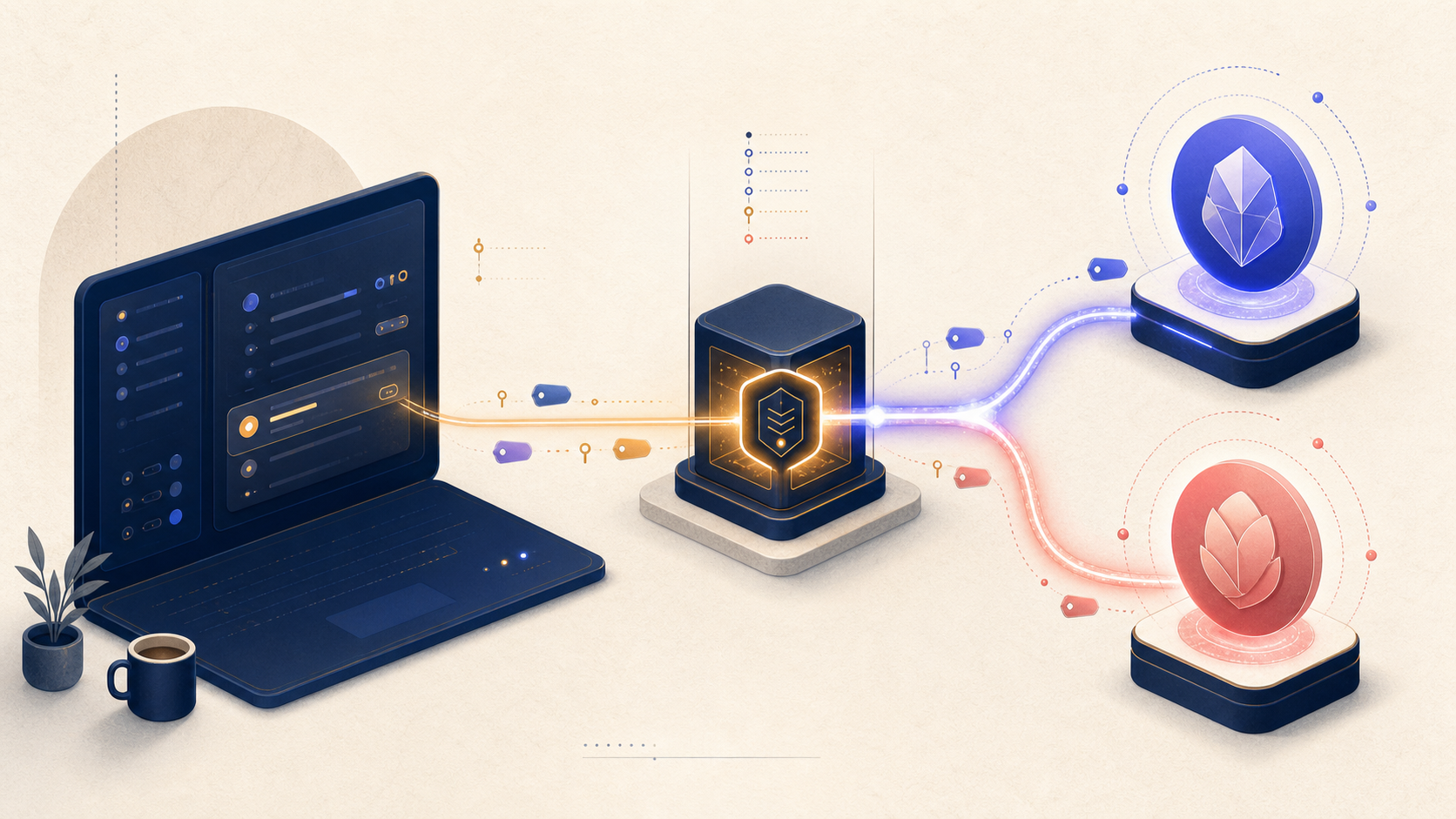
Teaching Buzz to Mention Remote Agents
A self-hosted Buzz pilot exposed the work behind first-class remote agents: identity discovery, native Nostr mentions, isolated routing, and a clearer interoperability contract.
Topic
9 related items across notes, deep dives, spotlights, and projects.
A self-hosted Buzz pilot exposed the work behind first-class remote agents: identity discovery, native Nostr mentions, isolated routing, and a clearer interoperability contract.
Block’s fast-moving open-source workspace is becoming a credible home for agent teams, but its sharpest advantages over Discord still come with early-product costs.

Hermes turns memory and experience into reusable skills. The promise is compelling, but durable learning also makes mistakes durable.

OpenClaw’s rise is real. So are the security, maintenance, and trust problems that come with an assistant powerful enough to act.

The useful unit is not "an AI." It is a bounded role with inputs, tools, authority, review points, and clear failure behavior.
Strong AI systems are not the ones that always respond. They are the ones that know when the next useful move is a question.

Memory is part of the shift from one-off answers to ongoing continuity. That changes how AI systems work, how they feel, and what users need to control.
A plain-English way to understand one of the most overused words in AI right now.

The hype is real, but so are the rough edges: OpenClaw can execute meaningful work, but still requires clear guardrails, careful rollout, and hands-on ownership to use well.